Slate-ish

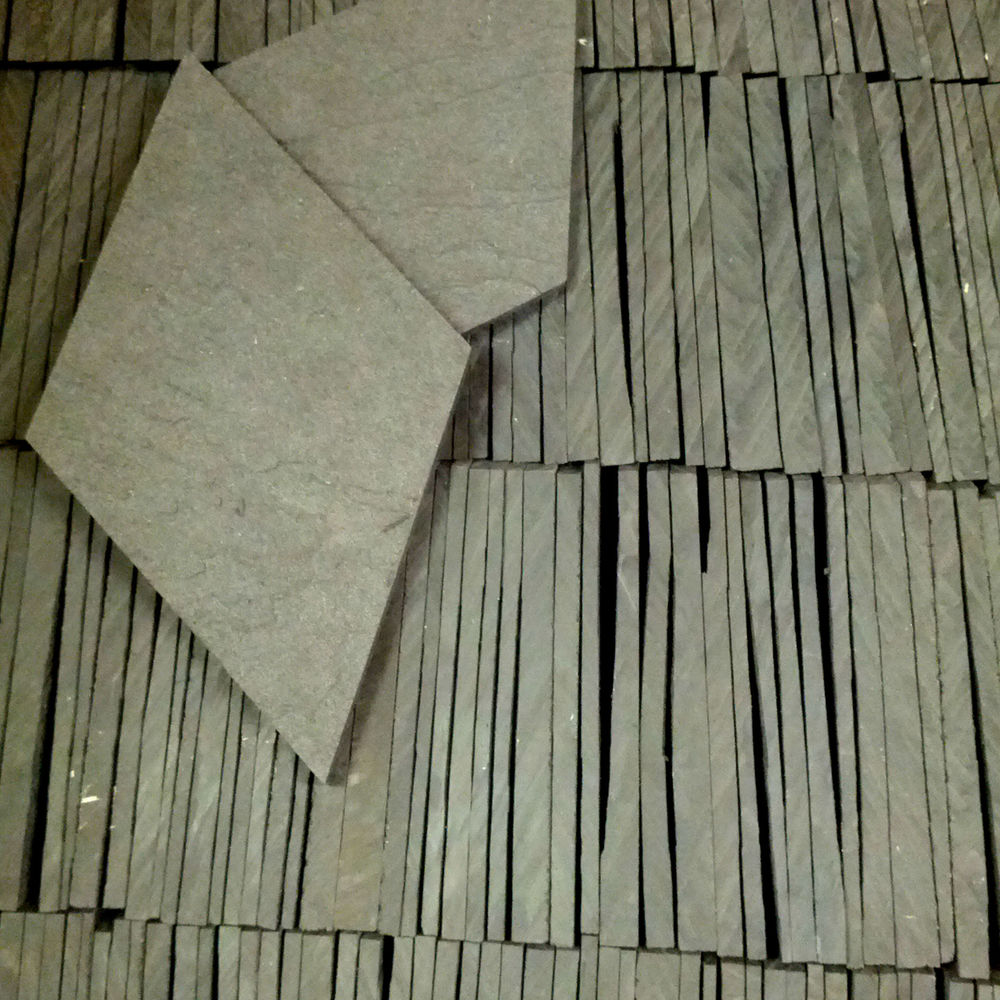
Who says scrap is useless? Slate-ish  is a tile product made in the US from 100% post industrial waste reclaimed from the fabrication of  paper-laminate products which are normally used for countertops (Richlite and PaperStone), skateboard ramps, bathroom partitions, lockers and more.

Slate-ish Strips | KitchAnn Style

The scraps are cut into various geometric shapes, and hand-split to create a tile that looks like slate. Six shapes are available from Slate-ish: Hex, Tri, Square, Para, Stud and Strip. The tiles are sold loose or as custom mounted panels. Tile depths vary from 1/8″-1/4″ and weigh 7-1.2 pounds per square foot.

Slate-ish Square| KitchAnn Style

Four colors are available: Soot, Bark, Chocolate and Earth. The color of the tile will vary slightly from piece to piece, and from batch to batch. Soot is considered the most consistent color, but mixing tiles during installation for a more uniform look is recommended.

The tiles can be sealed to protect and deepen the color, but it is not required.

 Slate-ish Para| KitchAnn Style

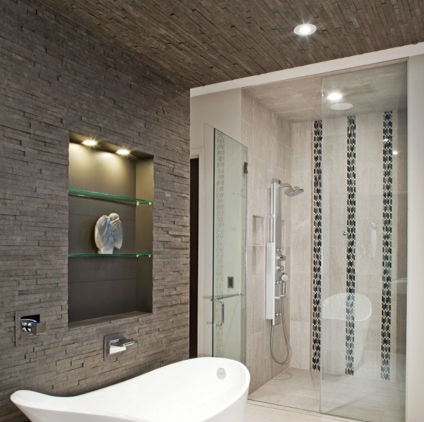
Slate-ish, which resembles stone tile, is appropriate for interior use and weighs a fraction of the weight of natural stone, making it ideal for unique installations. – such as feature walls, fireplace surrounds and even ceilings. While most choose to install Slate-ish in a dry-stack method, you can opt to install it with space and grout like standard ceramic tile.

Slate-ish | KitchAnn Style

Slate-ish tiles are impact resistant and at least 6 times stronger than natural stone. Slate-ish is non-porous and available with Class A fire rating. The tiles start at $20 per square foot.

Slate-ish Hex| KitchAnn Style

Slate-ish has been busy sourcing new materials to add to their line. Look for new offering such as large format tiles in the near future.

Lumen Depreciation

As LED technology continues to evolve, so too grows the efficiency and lifespans of LED lamps. Because LEDs have such long lives (estimated at 35,000 to 100,000 hours), it’s rather challenging to measure precisely how long they really do last — few groups have the patience or resources to measure an LED in various environments for 5 or more years. However, the National Institute of Standards and Technology (NIST) is currently working on such a project.

Without a predictable failure point, manufacturers decided to define LED life as the amount of time it takes for the light to fade to a certain percentage of its original strength. “Lumen depreciation is widely understood in the lighting community and is not unique to LEDs. But it doesn’t come into play when you have a light source that only lasts hundreds or thousands of hours, as with incandescents. On average, incandescents fail before the eye notices a difference in their output,” says Philips Marketing Communications Director Steve Landau.

People in an average office setting can’t tell there is a change in illumination until a lamp has dropped 30% in output. So it is not objectionable to wait until the LED is at 70% of its original spec before you replace the lamp.

This designation is represented by the letter ‘L’ followed by a set of numbers such as:

L70 = time to 70% of original light output. There are other ratings, but this is the most common rating and is universally accepted as the standard to measuring LED life.

For colored accent and exterior lighting, the lumen acceptable lumen drop-off threshold is often considered to be 50%.

Still, even these numbers are highly variable depending on how and where the LED was operated. Things that may influence the LED’s life are line current, ambient temperature, the type of luminaire and the quality of the material used. These differences make defining a LED’s service life even more challenging, since the lamp’s environment can drastically influence its lifespan.

Simply, we can’t determine the service life of an LED without considering its housing and application. This is the major reason why the NIST is conducting their LED study. They are monitoring LEDs in various scenarios with the goal of uncovering a reliable method of projecting how long LEDs will last.

HOW LONG is 100,000 HOURS?

bulbsWhether you believe 100,000 hours is realistic or not, I’ve included a chart to make understanding the life of a 100,000 hour rated bulb easier.

Hours of Operation:  100,000 hours is:
24 hours a day                11.4 years
18 hours per day             14.8 years
12 hours per day             22.8 years
8 hours per day               34.2 years


Although the lighting industry is still learning about the efficiency of LEDs, what we currently know holds real promise for major energy savings in the future. And while the LED bulb you pick off the store shelf may not entirely live up to its 100,000 hour rating, it will certainly outperform most traditional bulbs.

Grow at Home

Grow at Home

Spring is starting to creep into everyone’s minds and with that the thought of fresh herbs and vegetables. While it is possible to sow your seeds with snow on the ground, many areas of the country are still too frozen with the harsh arctic blast and ten named winter storms.

Growing herbs | KitchAnn Style

Some gardeners use a cold frame, which is a box-like structure with a clear glass or plastic top, to get their seedlings started. However, if you don’t have the space or find it a little too dirty, there is another option – the Urban Cultivator.

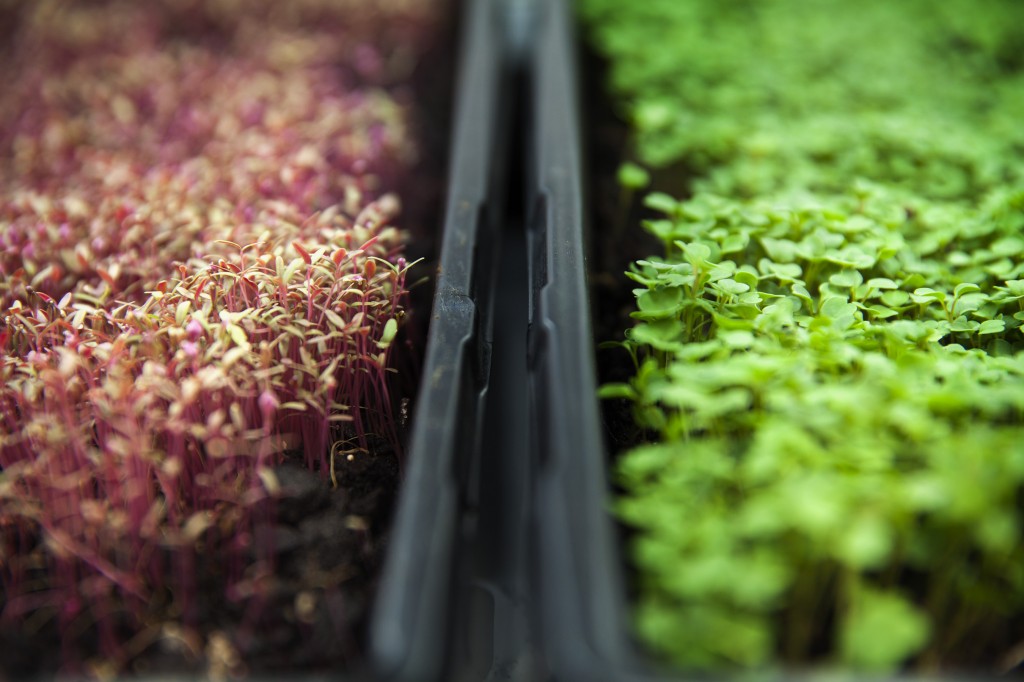
The Urban Cultivator Residential is a dishwasher-sized appliance with interior grow lights. Inside are racks that hold flats designed to contain one of three growing mediums — a Sure to Grow mat (suretogrow.com), sterilized soil or landscape fabric. In these, users can grow 50-some greens — including beet-tops, baby broccoli, wheat grass, pea sprouts, radishes, mustard greens, lentils, nasturtiums — as well as any number of herbs.

Grow at Home Kitchen Cultivator | KitchAnn Style

The unit is not difficult to install and requires a water connection similar to a dishwasher. You can choose between different door screen options (clear, frost, half-tone and dark) and even add a custom panel to match your cabinetry.

Grow at Home Kitchen Cultivator | KitchAnn Style

The Urban Cultivator will allow you to grow fresh herbs 365 days a year and know that they are pesticide free and healthy for your family. The cost savings for growing your own micro-greens can be as high as 90% according to research.

Your Urban Cultivator can be operated between 55 and 90 degrees with a relative humidity between 30% to 60%. The automated system does all the work and provides measured water to and from each grow tray. If your unit is set up as a stand-alone unit, you will need to empty and refill the water reservoir once a week when the indicator light is on. Four humidity domes are also included with the unit to aid in starting seeds.

Grow at Home Kitchen Cultivator | KitchAnn Style

A larger commercial unit is also available for restaurants and cooking schools where larger supplies are demanded. Besides herbs, small vegetables such as cherry tomatoes can also be grown. Pricing starts at $2,200.

You might also like:  Cannabis Appliances for the Home

London Design Festival – Day 2 Continued

From the V&A Museum we headed to the nearby Brompton Design District. The Brompton Design District is a collaboration between leading design shops, exhibition spaces and institutions on and around the Brompton Road, London. Together with the major institutions of the V&A and the Royal College of Art & Design, the area has long been known for its contribution to art, design and education.

andrew_martin_elephantFirst stop: Andrew Martin

Interior design company Andrew Martin specializes in creating and supplying travel-inspired fabrics, wallpapers and designs using ideas sourced from cultures around the world.

Its ideology is to surprise, stimulate and entertain; its aim, to bring its multilayered, multicultural, easy living style to everybody who likes it.

Andrew Martin Collage | KitchAnn Style

A trip to the Walton Street showroom in London has been described as “like stepping in
to Aladdin’s Cave, with an almost bonkers mix of beautiful and enormous objects that
shouldn’t go together, yet somehow do.”

Andrew Martin Wallpapers | KitchAnn Style

The whole showroom seemed never-ending and the fabrics and wallpapers were most incredible. The staff was also super friendly and very knowledgeable. My favorite part was a fun little interactive art installation called Dandelion. It was created by YOKE, an interactive design company from Denmark, in collaboration with London-based design agency Sennep and was part of the exhibition Decode: Digital Design Sensations at the V&A in 2009.  I made a Vine but the sound is horrible so I’ve decided to share this video by Sennep.

[vimeo http://vimeo.com/10904524]

de Le Cuona Logo | KitchAnn Style2nd Stop: de Le Cuona

After Andrew Martin we marched over to de Le Cuona to get an unveiling of the new fabrics by owner and creator Bernie de Le Cuona.

Hailing originally from South Africa, Bernie’s textile collections pair understated English elegance with sub Saharan accents. de Le Cuona works with European craftsmen to create exquisitely understated woven linens with beautiful textural finishes, soft wool paisleys , liquid velvets, and cashmere sheers.

de Le Cuona collage | KitchAnn Style

de Le Cuona is available worldwide via showrooms in London, New York and Moscow as well as online.

Fellow Blogtour companion and designer/blogger extraordinaire, Marilyn Russell, wrote a beautiful post on Bernie de Le Cuona back in May. It’s definitely worth a peek.  {Read it Here}

3rd Stop: 100% Design
Continuing on we next stopped at 100% Design held at Earls Court Exhibition Centre in West London.

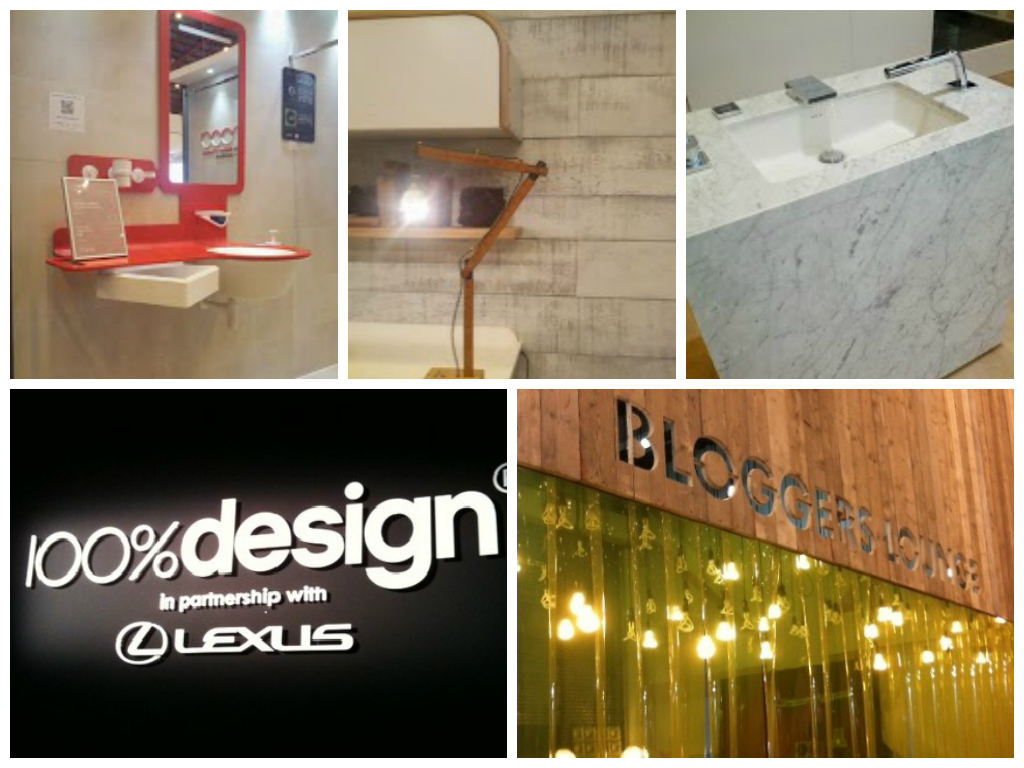
100% Design is still one of the largest and most comprehensive design destinations open during London Design Festival. This year the show focused on four industry sectors, each arranged around a central “hub” by different designers: Interiors by Talenthouse; Office by TILT; Kitchen & Bath by Aberrant Architecture; Eco Design & Build by Material Lab

At the center of the Kitchen and Bath hub, U.K. design studio Mette, in sponsorship with Gaggenau, set up the show’s restaurant and an inspiring Farm Kitchen exhibit which explored the integration of micro-agriculture within the kitchen experience.  For the exhibit, Mette brought together a variety of designers and manufacturers, including Bulbo, Back to the Roots, Flip and Tumble, Modern Sprout, ConcreteWall and Auxano,

farm kitchen exhibit 100% design | KitchAnn Style

I wandered the kitchen and bath hub – happy to be in my element – exploring products from Dornbracht, Porcelanosa, Corian, Interior iD, Amberth, deVOL, Pando and Rotpunkt. Brass was definitely trending in the kitchen displays and as expected the bathroom displays were very streamlined and minimal. After my feet and shoulders gave out, I joined my BlogTour in the Bloggers Lounge for a beer.

kitchen & bath hub 100% design | KitchAnn Style

4th Stop: Casa Brindisa

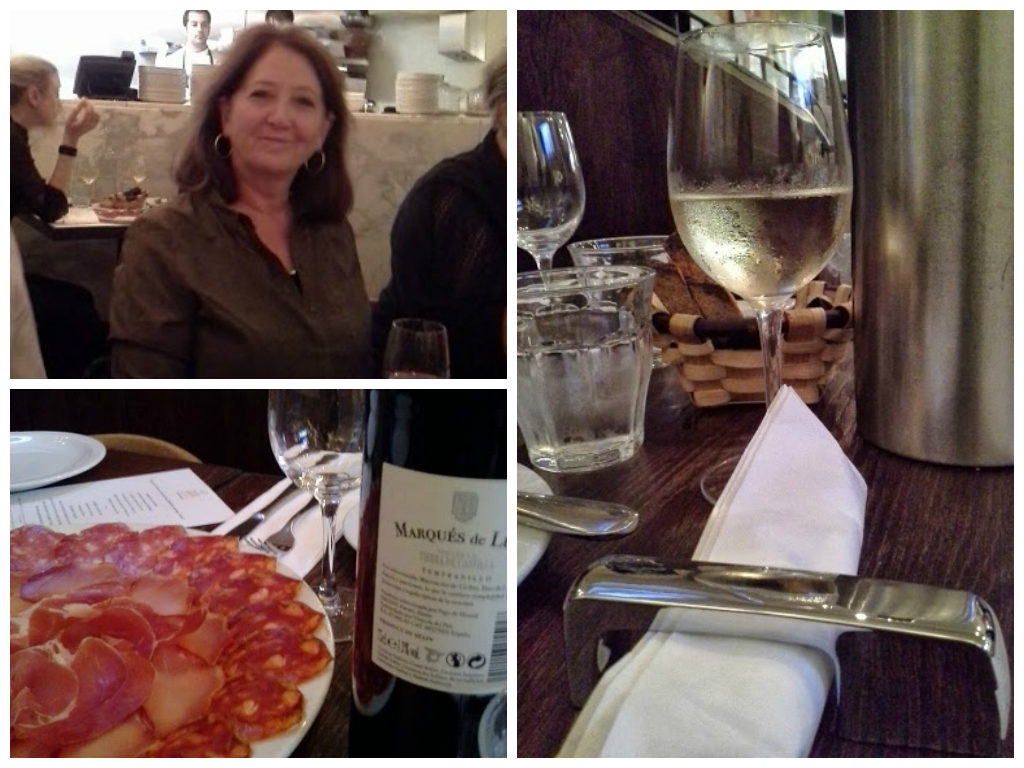
A short cab ride later we came to our final destination – dinner at Casa Brindisa. Casa Brindisa is a stylish Spanish Tapas restaurant located in South Kensington. This seemingly never-ending tapas dinner (I think we had 7 courses) was hosted by BlogTour sponsor Du Verre Hardware. I really enjoyed having co-founder Gina Lubin at my table and getting the opportunity to talk with her. I also have to note that the Rise pull made a really cute napkin ring.

Casa Brindisa Dinner | KitchAnn Style

We rolled ourselves into cabs at the conclusion of dinner and headed back to the citizenM Hotel where many of us gathered in the bar to discuss the events of the day. It was a long but fabulous day. Keep checking back for my next post on day 3.