Showerheads are filled with nasty bacteria

New research suggests that many shower heads are teeming with Mycobacterium avium, a bacteria that can cause lung disease. Should you be worried?

Researchers from the University of Colorado conducted  tests on 45 different shower heads from nine cities in the United States, using genetic testing to reveal bacteria that can’t be detected by the usual method of growing them in a dish.

The type and number of bacteria in shower heads varied from place to place, often corresponding roughly with levels of bacteria in the water supply. However, one type of bacteria, called mycobacteria, appeared in higher numbers inside shower heads. The researchers think these bacteria form a waxy biofilm that’s not easily washed away by water.

The most noteworthy finding was a species called Mycobacterium avium. It’s common, often found in water and soil, and about 20 percent of the swabs gave test results suggesting that Mycobacterium avium could be present. Mycobacterium avium does have the potential to make people ill, although the immune system of a healthy person will almost always keep this germ in check.

“If you are getting a face full of water when you first turn your shower on, that means you are probably getting a particularly high load of Mycobacterium avium, which may not be too healthy,” said lead researcher Norman Pace.

Since most people do not stand facing the shower when they first turn it on  and attempt to swallow the first water that comes out there is no reason to be alarmed.

“[The study] is nothing to freak out about because most germs don’t hurt you,” says Philip M. Tierno Jr., PhD, the director of clinical microbiology and immunology at New York University Langone Medical Center. People come into contact with 60,000 types or groups of bacteria on a regular basis, says Tierno. “Only one or two percent are pathogenic,” he explains.

If all this talk of bacteria has you worried,  before you rush off to bleach your showerhead know that mycobacteria will slowly grow back. When researchers did try treating one shower head with diluted bleach, they ended up with a greater proportion of some (harmless) bacteria in subsequent tests.

Metal showerheads appear to be less likely than plastic showerheads to grow biofilm, according to the researchers. Tierno recommends taking a steel brush and good cleaning solution to wash out metal showerheads or replacing them once a year or more frequently, like they do in hospitals.

If you are still feeling scared that your immune system will not protect you consider taking cold showers since bacteria thrive in warm, moist environments.

Add to FacebookAdd to NewsvineAdd to DiggAdd to Del.icio.usAdd to StumbleuponAdd to RedditAdd to BlinklistAdd to TwitterAdd to TechnoratiAdd to Furl

Color Trends for 2010

rooted color trend | KitchAnn Style

New color trends presented recently by Sherwin Williams reaquaints designers with the past for inspiration in the near future.

Rooted
rooted

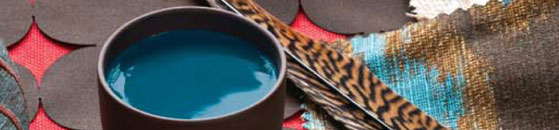
Rich, earthy colors associated with African, Aboriginal, and Native American cultures.  Inspiration comes from members of Ethiopian tribes who paint their bodies with green and red pigments sourced from volcanic ash, as well as weeds, grasses, and shells. The deep teal and ash gray of African wildlife and landscapes, as well as the bright designs of the locals’ textiles and beads, also serves a launching point for new designs.

Simplified
simplified-hrd

Lines are well-tailored and clear, translucent materials that reveal shape and structure. This is a nod to the Bauhaus style of architecture, with its absence of ornamentation and its harmony between form and function. A current example of this trend is Guggenheim Museum.

Treasured
tresured

Elements are weathered and the design is enhance  by organic aging. An example is the Rough Luxe Hotel in the United Kingdom, where the original layers of peeling paint and ancient wallpaper are still visible on the walls. This “less-than-perfect aesthetic” also includes the use of distressed leather, vintage tapestries, found objects, and patina.

Refreshed
refreshed

Bright, energized floral colors that evoke optimism and exuberance.  “Flower power” of 1960s vintage, with a hippie spirit makes a return. Lemonade yellow, crisp green, and vivacious violet are among the colors that play into this theme.  These vibrant colors comes partly as a response to the challenging times and a need for something positive to balance out the stress many are currently facing.

Add to FacebookAdd to NewsvineAdd to DiggAdd to Del.icio.usAdd to StumbleuponAdd to RedditAdd to BlinklistAdd to TwitterAdd to TechnoratiAdd to Furl

Viking Recalls 45,000 Refrigerators

Viking Recall2Viking Range Corporation, of Greenwood, Miss., is recalling45,000 Built-in Refrigerators because the door can detach and hurt consumers. Broken toes and fingers have been reported according to the CPSC.

The 48″ and 36″ Stainless Steel Refrigerators were sold from July 1999 through April 2006.

Check your refrigerator for the following model codes.
viking recall
To avoid injury from the door sheering off, consumers are urged not to use the product if the door is loose, sagging or not sealed properly and contact Viking for a free in-home repair. If your door appears stable you may continue to use cautiously.

Call Viking toll-free at (888) 345-2650 from 8 a.m. to 5 p.m. ET

Add to FacebookAdd to NewsvineAdd to DiggAdd to Del.icio.usAdd to StumbleuponAdd to RedditAdd to BlinklistAdd to TwitterAdd to TechnoratiAdd to Furl

Syntheitc Gypsum is called “Green” by some, Toxic by others

Toxic Home SyndromeSynthetic gypsum has been praised for having the same or better physical properties than natural gypsum and can be  easier to install.

Natural gypsum is mined; synthetic gypsum (also known as “recaptured” gypsum) is a by-product recaptured during the pollution-reduction incentives (stack scrubbing) of coal-fired electricity generation plants.

Gypsum by-products would be sent to the landfill if wallboard manufacturers did not purchase them. Manufacturers are branding these wallboards as “Green” due to combining the synthetic gypsum with recycled paper facings, and the ability to locate manufacturing facilities near major markets away from mines.

A recent class action lawsuit  filed against Georgia-Pacific Gypsum and 84 Lumber Company on behalf of Florida homeowners Mike and Jill Swindler will soon bring American wallboard into the spotlight with Chinese drywall.

The lawsuit asserts that the “ToughRock” was made with synthetic gypsum rather than natural gypsum which is what drywall has been made from for decades.

“When synthetic gypsum is used to manufacture drywall, the end product contains excessive amounts of sulfur-based pollutants,” the suit maintains. “When the exterior of Florida homes containing synthetic gypsum drywall become heated due to normal Florida temperatures, the air temperature inside the wall cavity between the outer shell of the home and the inner drywall becomes significantly elevated. These elevated temperatures combined with Florida’s humidity cause sulfur dioxide gas to be released … [causing] significant oxidation of various metals that lie in close proximity to the drywall.”

GP and 84 “had a duty to exercise reasonable care in inspecting, marketing, and/or selling drywall placed into the stream of commerce, including a duty to assure that the product would perform as intended and would not cause and/or did not cause damage as described herein,” the suit asserts. “Defendants breached their duty by failing to exercise ordinary care.”

The suit alleges GP and 84 broke Florida’s statute regarding the drywall’s “implied warranty of merchantability,” as well as a statute dealing with “breach of implied warranty of fitness for a particular purpose.”

The Swindlers, since completeing their home in 2006, have replaced six coils in two air handlers due to copper corrosion and have had problems with their microwave, dishwasher, television and fire alarm.

Georgia Pacific released this statement: “We are disappointed that they elected to pursue a lawsuit without first informing us of their concerns, ..We stand behind the quality of our products and take customer complaints seriously.”

Is this the same problem caused by Chinese drywall?
The process of “scrubbing” the smokestack emissions creates calcium sulfate, or gypsum, which can then be used to make drywall. In the U.S., according to the U.S. Gypsum Association, American manufacturers gather the gypsum from the smokestack process after the scrubbing, which produces a cleaner product, and is believed to be safe. But in China, the suspicion is fly ash may have been obtained earlier in the process, thus creating a product with additional chemical components.
Add to FacebookAdd to NewsvineAdd to DiggAdd to Del.icio.usAdd to StumbleuponAdd to RedditAdd to BlinklistAdd to TwitterAdd to TechnoratiAdd to Furl